A train window can tell you a surprising amount about a place. Over a few hours, the scenery might shift from busy streets to farmland, then to forests, cliffs, or snowy peaks. A ferry offers the same kind of slow transition, with towns gradually disappearing behind you and a completely different landscape appearing ahead.
The destination may still be hours away, but the route has already given you a glimpse of the region that no airport arrival could offer.
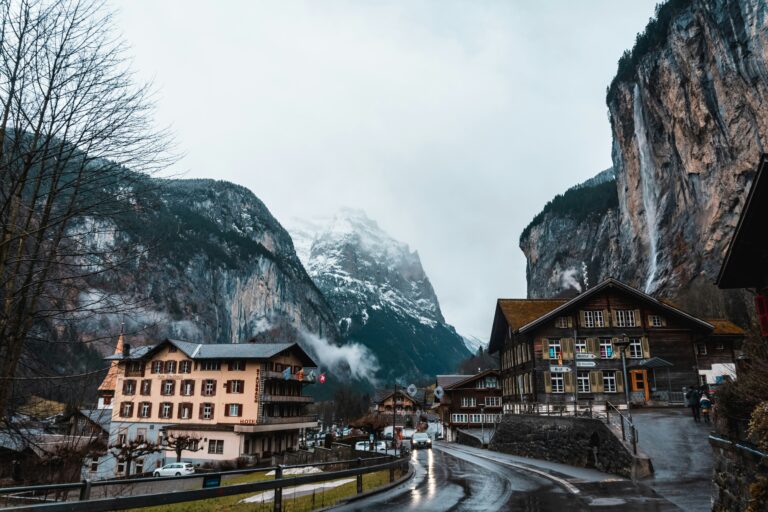
Take the Bernina Express in Switzerland. The route between Chur and Tirano passes through Alpine valleys, lakes, small villages, and dramatic mountain scenery, with the railway itself becoming part of the reason people take the journey. You don’t simply sit there waiting to arrive. You watch the landscape change and slowly realize that the ride is something you would have wanted to experience even if it didn’t lead anywhere.
Some journeys are worth taking for everything you see before you get there.
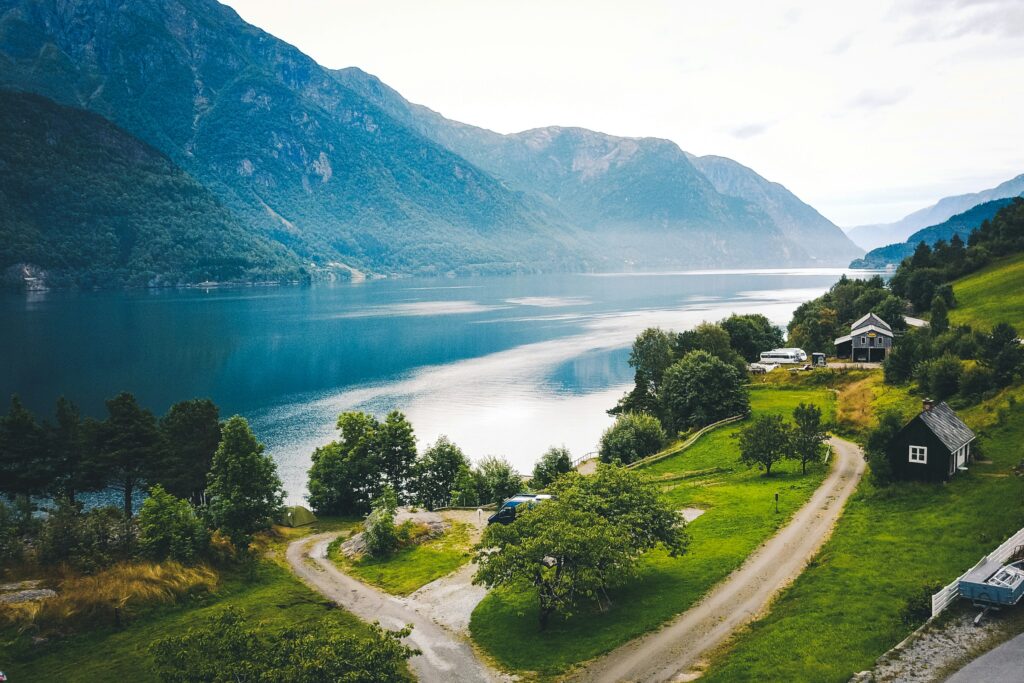
Norway offers a different version of the same idea. Coastal ferries connect towns and small communities along the country’s long shoreline, turning a practical way of getting around into a chance to watch islands, mountains, fishing villages, and open water pass by. In Japan, scenic trains can take you through quiet countryside far removed from the energy of Tokyo or Osaka. And in New Zealand, a road between two destinations can become a memorable part of the trip simply because the scenery keeps giving you a reason to stop.
There is something particularly satisfying about watching a landscape change gradually. A city disappears behind you, buildings become villages, villages become fields, and eventually the mountains or coastline begin to take over. You get a sense of where you are rather than simply arriving there.
Traveling through a landscape gives you time to notice the small changes that a quick arrival tends to hide.
The best part is that this kind of journey doesn’t have to take an entire day. A short train ride through the countryside, a ferry across a bay, or a scenic drive between two towns can be enough to make the route memorable. Even a regular local train can become interesting when the window offers something you don’t normally see.
And perhaps that’s what makes these journeys different from simply getting from one place to another. You have time to settle into the trip, look out the window, talk, read, listen to music, or do absolutely nothing for a while. The journey has its own rhythm, and there is no need to fill every minute of it.
Sometimes arriving somewhere feels better precisely because you didn’t rush to get there.
A destination can be beautiful on its own, but the way you reach it can become part of the memory you take home.