Some cities make you notice the water immediately. In others, you might spend half a day walking around before realizing how much it has been shaping the experience all along.
A canal appears at the end of a narrow street. A ferry pulls away while you are standing on the waterfront. Someone is sitting on the edge of the harbor with a coffee, while cyclists pass behind them. You cross a bridge and suddenly the whole neighborhood looks different.
That is one of the pleasures of visiting a city built around water. The water is not simply part of the scenery; it changes the rhythm of the city and the way you move through it.
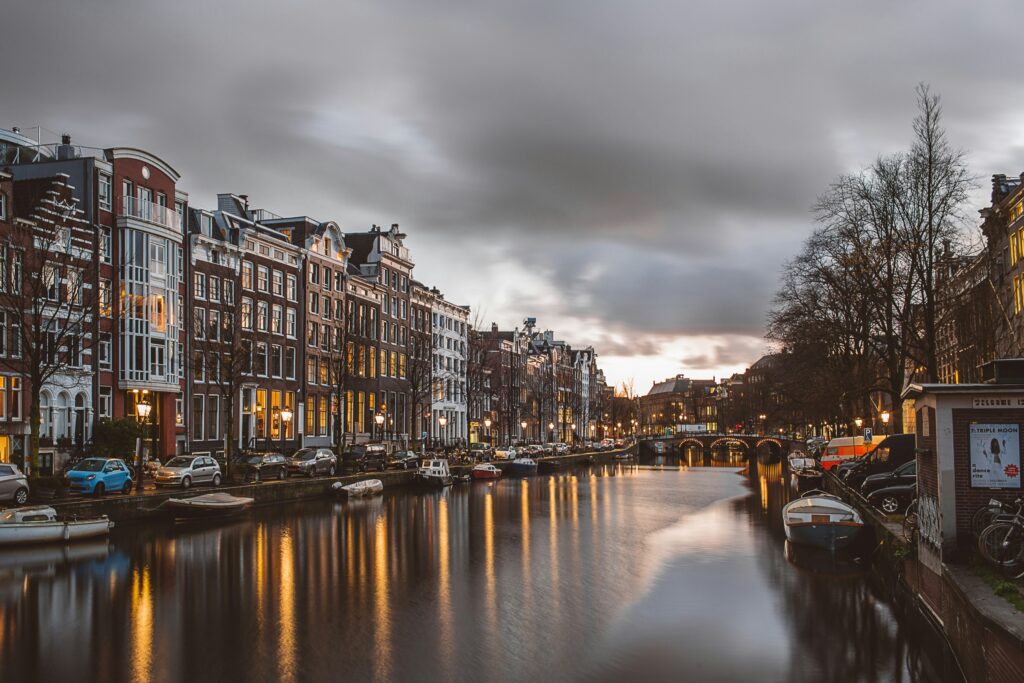
Venice is the obvious example, where boats take the place of cars and getting from one neighborhood to another means constantly negotiating canals, bridges, and narrow streets. But the relationship can be much less dramatic. In Amsterdam, canals are part of an ordinary morning, with bicycles, houseboats, cafés, and residential streets all facing the same waterways. Stockholm stretches across islands, making ferries feel less like a tourist activity and more like another way of getting around. In Copenhagen, the harbor has become part of everyday city life, with people swimming, meeting friends, sitting by the water, or simply passing through.
The interesting part is that you don’t necessarily need to plan a “water experience” in any of these places.
Sometimes it happens while looking for a café. Sometimes it is the ferry you take because it is quicker. Sometimes it is a bridge you cross on the way to dinner. The best waterfront moments often happen when the water is not the reason you went there in the first place.
Water also gives familiar cities another perspective. A neighborhood that felt crowded from the street can look surprisingly open from a boat. Buildings that seemed disconnected suddenly form part of one continuous waterfront. From the middle of a harbor, you can understand the shape of a city in a way that is difficult to see while walking through it.
This can make even a short boat ride feel worthwhile. Not because it is another attraction to add to the itinerary, but because it changes the way you see everything you have already been exploring.
And then there are the quieter details. Laundry hanging above a canal. Small boats tied outside residential buildings. Locals sitting along a harbor at the end of the day. Bridges becoming natural meeting points. Reflections changing as the afternoon turns into evening.
These details are easy to miss if the waterfront is treated as a viewpoint rather than part of the city itself.
Different cities have developed completely different relationships with their waterways. Venice grew around a lagoon and made water central to movement and trade. Amsterdam’s canal network became part of the city’s structure and identity. Stockholm’s islands create a constant feeling of being close to open water, even in the middle of an urban neighborhood. Istanbul sits between two continents, with the Bosphorus making the geography of the city impossible to ignore.
Even Bruges, with its smaller canals, shows how waterways can influence the character of a place without dominating it.
The most interesting waterfront cities are not necessarily the ones with the most impressive views. They are the ones where water has become part of ordinary life.
That is also what makes them rewarding to explore slowly. You can walk without a particular destination, follow a canal for a while, stop somewhere along the harbor, take a ferry instead of a train, or simply sit near the water and watch the city move around you.
You start noticing that the water creates its own kind of orientation. It gives streets somewhere to lead, neighborhoods a different edge, and travelers another way to understand where they are.
By the end of the day, you may remember a particular bridge, a ferry crossing, or the way the buildings looked reflected in the water more clearly than another famous landmark.
Maybe that is the real appeal of cities built around water. They give you more than another beautiful view; they give you another way to experience the city.