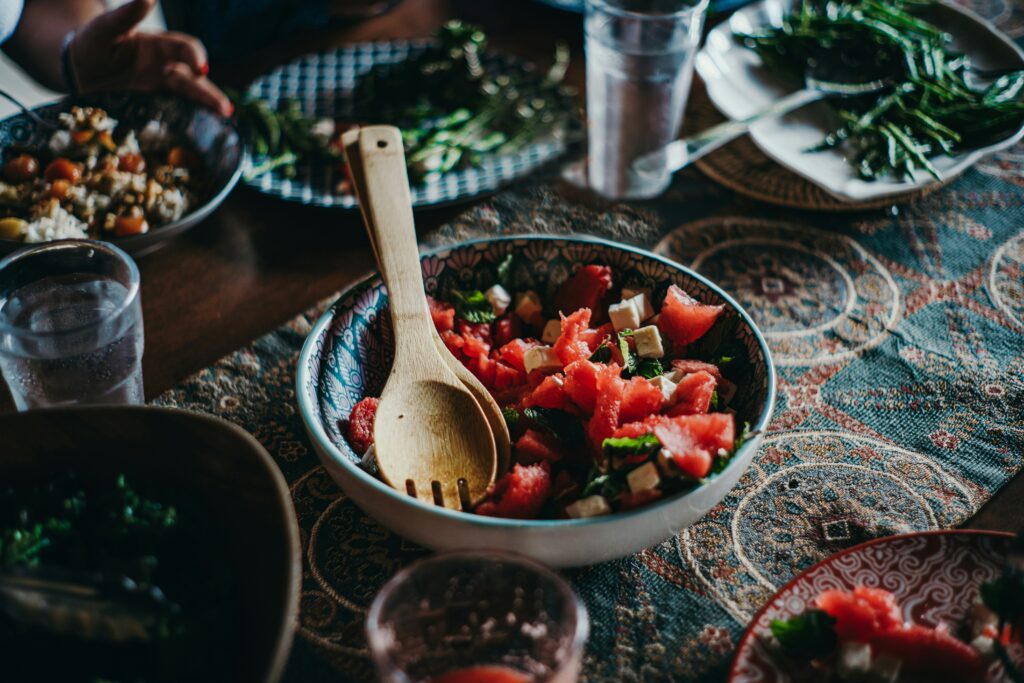
There are many ways to experience a new place, but few are as powerful as sitting down to eat with others. Across cultures, sharing food is more than nourishment — it is an invitation. A shared table dissolves distance, softens language barriers, and creates a space where connection feels natural and unforced. In travel, meals often become the moments where places turn into people.
Food as a Universal Language
No matter where you are in the world, food speaks before words do. A warm cup of tea, freshly baked bread, or a simple home-cooked dish communicates care without explanation. Even when language fails, the act of offering food says: you are welcome here.
This universality is what makes meals such a powerful bridge. Sitting together, passing dishes, tasting something new — these gestures create immediate familiarity and trust, reminding us that hospitality is deeply human.
In many cultures, meals are not rushed. Tea ceremonies, long family dinners, shared street food — these moments invite slowness. When you sit at a table abroad, time often moves differently. Conversation unfolds naturally, pauses are comfortable, and attention stays anchored in the moment.
These rituals teach travelers something subtle but lasting: connection doesn’t require performance. It requires presence.
Being invited to share a meal transforms your role. You are no longer just a visitor passing through — you become a guest. At the table, stories emerge. People talk about family, traditions, daily life. Laughter flows more easily. Curiosity replaces distance. These exchanges don’t have to be deep or dramatic to matter. Even simple conversations over food can leave a strong emotional imprint, because they happen in a space of openness and mutual respect.
There’s a reason meals create closeness. Eating together engages the senses — taste, smell, texture — grounding us in the body and calming the nervous system. This physical ease makes emotional openness easier. We relax, we listen better, we connect more honestly.
Food also carries memory. A dish prepared the same way for generations holds stories of place, heritage, and care. When someone shares that with you, they are sharing a piece of their world.
Long after the trip ends, it’s often these shared meals that remain most vivid. The kitchen table where you learned a family recipe. The street stall where locals insisted you try their favorite dish. The quiet breakfast with strangers who felt familiar by the end.
These moments stay because they are rooted in human connection, not sightseeing.
Travel is often described as seeing new places, but its deepest value lies in how it helps us feel connected — to others and to ourselves. Sharing a table abroad reminds us that the world is not as distant as it seems. That warmth exists everywhere. That sometimes, the simplest acts create the strongest bonds.
In the end, food doesn’t just feed the body.
It opens the heart — one shared meal at a time.